|
|
 GeoAstro Applets |
 Astronomy |
 Chaos Game |
 Java |
 Miscel- laneous |
|
Sun Shadow Applet |
More details: "Azimuth and Elevation Diagrams"
|
Select a location from the
menu, or enter a decimal degree value for latitude (southern negative)
into the text field of the applet, 
The applet will adjust the timezone. As there are no definite rules for daylight saving time, check the time offset to get the correct local times. Press RETURN after entering the object height. |
|

|
|
 |
Uncheck the
"Trace" box to display a single shadow only. |
 |
The coordinates of the cross hair cursor are also shown in the status bar of the browser. |

|
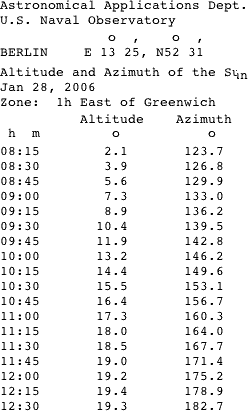
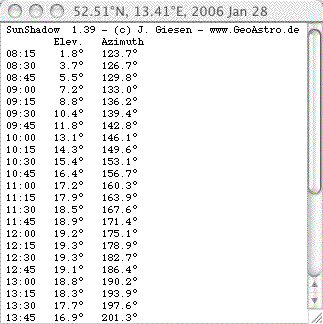
Comparing the applet results to those of USNO there are slight differences for small altitudes, which are due to the fact that USNO is taking into account the atmospheric refraction (relevant for very small altitudes only).
|
|
|
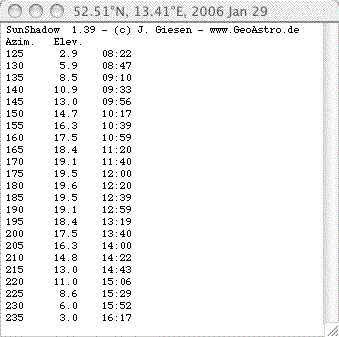
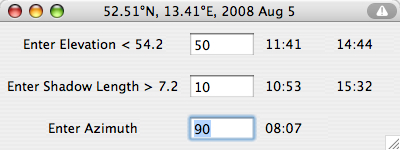
Press the "Get Time" button and enter the elevation angle of the Sun, or the length of the gnomon shadow, or the azimuth angle and hit RETURN to get the times. This item is not yet working properly for latitudes near the equator, sorry. |
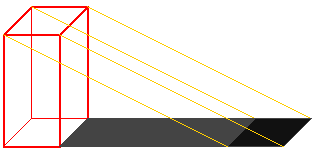
The length and the direction of the shadow depend on the elevation (altitude) and azimuth angle of the sun:
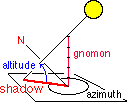
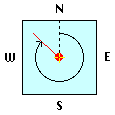
In nautics, the azimuth is measured eastwards from the North point, in astronomy westwards from the South point.
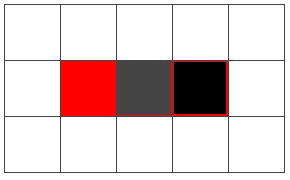
Object height is 10 m, elevation angle is 27°, sun azimuth angle is 270°:
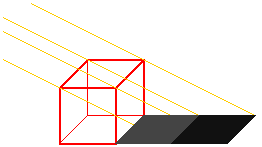
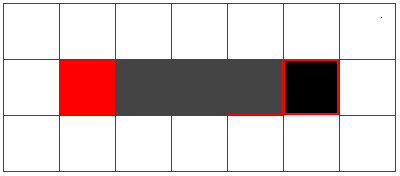
Object height is 20 m, elevation angle is 27°, sun azimuth angle is 270°:
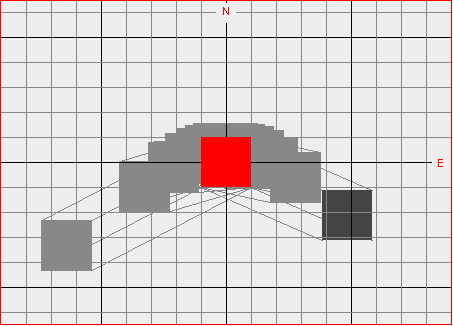
Example:
Berlin, July 5, from 6:00 to 20:00
Running the applet hit the "h" key to increase the hour !
Some more details on my Sundial Page
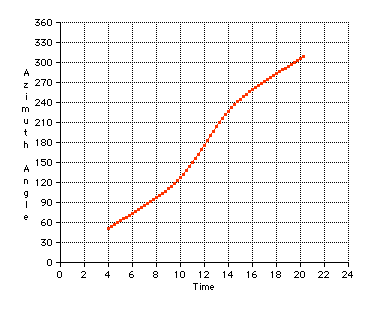
Azimuth
angle
of the Sun
Berlin (51.51°N, 13.41°E) on
2006, June 21
northern summer solstice
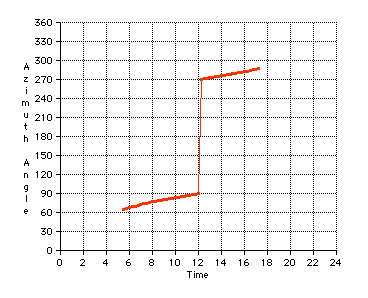
Azimuth angle of the Sun
23.5°N, 13.41°E on 2006, June 21
northern summer solstice
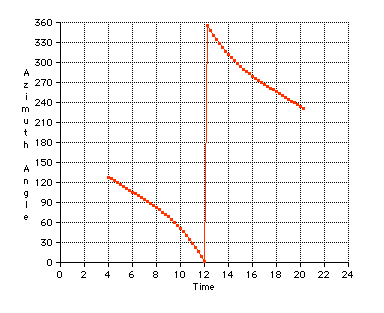
Azimuth angle of the Sun
51.51°S, 13.41°E on 2006, Dec 21
southern summer solstice
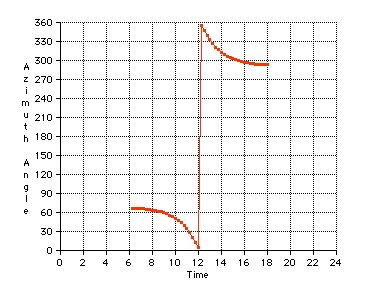
Azimuth angle of the Sun
0°N, 13.41°E on 2006, Jun 21
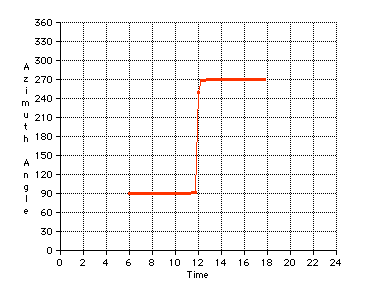
Azimuth angle of the Sun
0°N, 13.41°E on 2006, Sep 23
exinox

Please visit my GeoAstro Applet Collection
Last modified: 2023, Oct 07
© 2000-2023 Juergen Giesen